Introduction
The Centers for Disease Control and Prevention (CDC), though its Epidemiology and Laboratory Capacity (ELC) program, and in partnership with the U.S. Department of Justice (DOJ), provided financial assistance to recipients to support the detection and mitigation of COVID-19 within confinement facilities. The purpose of this initiative was to strengthen public health response capacity by providing targeted resources to jails, prisons, and detention centers.
This was a three-year grant program (2021–2024), funded separately to New York State and New York City. The New York State Department of Health’s (DOH) AIDS Institute administered the state portion of the COVID-19 ELC grant. To implement the program at the county level, DOH entered into a contract with the New York State Sheriffs’ Association (NYSSA), which engaged Robert Cuttita, a recently retired Correctional Facility Specialist, to oversee and administer the grant activities statewide.
Abstract
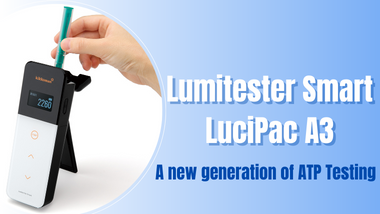
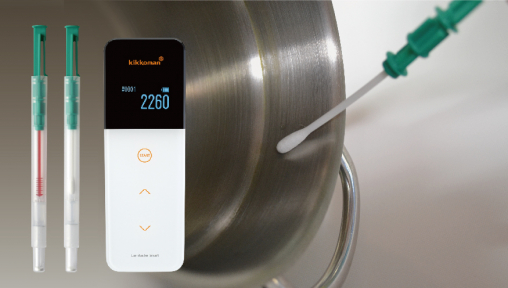
The ATP Test (Kikkoman A3) is a scientific tool used to measure surface cleanliness by detecting residual organic material at the molecular level. During the 2021–2024 COVID-19 ELC Grant Program, the use of ATP was introduced across all 56 New York State County Jails plus five Specialized Secure Detention (SSD) facilities to establish a standardized, quantifiable definition of “clean.”
Using ATP testing provides a rapid and objective method to measure and verify the effectiveness of cleaning and sanitization protocols. The quantification made possible through ATP measurement eliminates subjective interpretation of cleaning effectiveness and serves to improve overall hygiene management. The measurements, expressed in Relative Light Units (RLU), allowed jail administrators to identify high-risk areas, implement corrective actions, and track sanitation improvements over time.
This case study highlights how the use of the ATP Test (Kikkoman A3) enhanced operational accountability, promoted evidence-based decision-making, and significantly improved cleanliness outcomes throughout the county jail system in New York.
Methodology
All 56 New York State County Jails and five Specialized Secure Detention (SSD) facilities were evaluated using the ATP Test (Kikkoman A3) pre and post cleaning for health program implementation. This instrument proved so effective that, during the grant, each facility was provided with its own ATP meter and testing swabs. This expenditure was approved by the New York State Department of Health as part of the grant process to support ongoing monitoring and staff training.
On-site visits to every county jail and SSD facility were conducted by Robert Cuttita and his team. ATP testing at each facility established baseline cleanliness data, allowing jail administrators to better understand the existing levels of sanitation within their facilities and provide a quantifiable standard for evaluating the effectiveness of future cleaning and disinfection protocols. All the county facilities received baseline measurements during the evaluation period.
Sampling Locations
Areas tested at each NYS County Jail and SSD facility
- Breakroom tables
- Locker room door handles
- Staff Bathroom door handles
- Intake Counters
- Kitchen counters
- Incarcerated population tables and chairs
Acceptable Criteria
Based on ISSA Clean Standard Guidelines:
- Effective Cleaning (Pass): 0-499 RLU
- Needs Improvement (Caution): 500-999 RLU
- Ineffective Cleaning (Fail): 1000 or above
* The recommended standards for measurements conducted using the Lumitester Smart and the LuciPac A3 Surface. ISSA established the benchmark with a sample collection size of 5cm x 5cm, whereas the manufacturer's recommendation is 10cm x 10cm.
Read the full "The ISSA Clean Standards"
Results
During the 2022 initial ATP testing, data were color-coded according to the ISSA Clean Standard—red (ineffective cleaning), yellow (needs improvement), and green (effective cleaning)—allowing jail administrators to quickly assess cleaning performance at a glance. Results revealed that 100% of participating jails had more than one surface in the red zone, while only 8% had one or more surfaces in the green zone. ATP readings ranged from a high of 385,893 RLU to a low of 158 RLU, with both measurements recorded on recently cleaned staff breakroom tables, highlighting inconsistencies in cleaning effectiveness.
In response, facility leadership collaborated to implement corrective actions, including enhanced cleaning and sanitation training for staff and incarcerated individuals, and the launch of a “Cleaning for Health” program offering Certified Custodial Technician (CCT) certification through the Cleaning Management Institute. Ongoing education, site visits, and standards development further strengthened practices. The initiative significantly improved cleaning performance, promoted professional development, and gained recognition in both local and national media.
Discussion
ATP testing demonstrated that cleaning protocols were generally effective in high-visibility areas such as food preparation counters and dining tables; however, several surfaces showed residual contamination after cleaning. Follow-up ATP sampling conducted in late 2023 and early 2024 across eleven centers produced mixed results, largely depending on how effectively each facility implemented the recommended improvements and the “Cleaning for Health” training program.
Facilities such as Jail E showed the most significant improvement, moving from the “ineffective cleaning” category to “effective cleaning.” Jail D improved from “ineffective cleaning” to “needs improvement,” while Jails A, B, and C demonstrated measurable reductions in ATP levels but remained within the ineffective range. Other facilities experienced setbacks, underscoring the importance of consistent implementation, appropriate product selection, staff training, and equipment upgrades such as microfiber systems and proper chemical dilution control. A 2025 unannounced follow-up visit to Jail G demonstrated long-term success. ATP readings taken in secured areas—including intake countertops, housing unit tables, restroom door handles, and breakroom tables—all met the ISSA Clean Standard threshold (≤499 RLU), confirming that sustained training, proper tools, and accountability can achieve effective cleaning outcomes.
Beyond surface hygiene improvements, participating jails reported enhanced staff culture, reductions in tracked infractions, increased engagement in the Cleaning for Health certification program, and stronger partnerships with suppliers and distributors. Overall, the ATP-driven monitoring approach supported continuous improvement, accountability, and the development of cleaner, safer, and more hygienic correctional environments.
Table 1.
| County | Location | Original ATP (2022) | Follow up ATP (2023) | Results |
| Jail A | Breakroom table | 16,636 RLU | 13,537 RLU | 19% Improvement |
| Jail B | Intake countertop | 7,540 RLU | 1,743 RLU | 77% Improvement |
| Jail C | Restroom secureside | 5,827 RLU | 1,150 RLU | 80% Improvement |
| Jail D | Housing unit pod table | 3,008 RLU | 931 RLU | 69% Improvement |
| Jail E | Staff area | 4,980 RLU | 466 RLU | 90% Improvement |
| Jail F | Breakroom table | 11,039 RLU | 30,277 RLU | 174% Worse |
| Jail G | Staff restroom door handle | 584 RLU | 34,000 RLU | 5,722% Worse |
| Jail H | Cuntertop | 7,450 RLU | 9,857 RLU | 32% Worse |
| Jail I | Intake countertop | 6,440 RLU | 6,586 RLU | 2% Worse |
| Jail J | Intake countertop | 2,443 RLU | 3,114 RLU | 27% Worse |
Conclusion
The ATP Test (Kikkoman A3) confirmed that most cleaning practices across the evaluated facilities are effective in reducing surface residues to acceptable levels. The study also aimed to identify specific high-risk areas were sanitation procedures require improvement.
Ongoing ATP monitoring provides a reliable verification tool, ensuring that cleanliness standards are consistently maintained and that corrective actions are both effective and measurable. This proactive approach supports regulatory compliance, enhances operational hygiene, and strengthens overall facility safety.
Importantly, without the quantitative measurements provided by the ATP Test (Kikkoman A3), there would be no objective way to determine or demonstrate cleanliness, making the testing an essential component of evidence-based sanitation management. Measuring ATP using the Kikkoman A3 test, the entire value chain of jails, advisors, distributors, and manufacturers was able to collaborate to make a lasting impact on New York State.
Case Study Authors
- Robert Cuttita's Background:
Robert brings over 30 years of correctional experience across New York State, with a comprehensive background spanning facility operations, regulatory compliance, investigations, and system oversight. He began his career in 1990 at the Albany County Jail and, in 2002, joined the New York State Commission of Correction, where he was assigned to the New York City region, including Rikers Island, and the Suffolk and Nassau County systems. Throughout his tenure, he provided technical assistance to correctional facilities to ensure compliance with local, state, and federal regulations, and conducted investigations involving inmate complaints, death reviews, and minimum standard evaluations to promote safe, stable, and humane correctional environments. In 2017, he became Assistant Jail Administrator at the Schenectady County Jail. He retired in 2021 from the NYS Commission of Correction as a supervisor overseeing the Raise the Age initiative, as well as construction and renovation reviews for correctional facilities statewide. Currently, Robert operates his own consulting company, working with organizations such as NYSSA and NYSSI, consulting for the NYC juvenile system and multiple county jails throughout New York State. He also serves on the National Sheriffs’ Association Emerging Technology Committee and has acted as an expert witness in several federal cases.
- Brant Insero's Background:
Brant Insero is ISSA’s Chief Global Engagement Officer for facilities. With over 20 years of professional training, he has instructed industry professionals within commercial cleaning, supply chain, telecommunications, retail, and financial vertical markets. Brant is currently responsible for the engagement, sales, and support of ISSA’s programming globally for facility managers. Since 2011, Brant has traveled to Asia, Europe, South America, Australia, Canada, and Mexico to help certify over 40,000 industry professionals. Brant has delivered hundreds of webinars, workshops and written many articles for trade publications within the commercial cleaning industry. Throughout his tenure at ISSA, he has performed hundreds of onsite facility audits focused on data-driven results. With nearly ten years of experience diversifying the revenue for ISSA and managing a 20% year over year growth strategy at the leading trade association for the global cleaning community, he has helped ISSA reach new financial strengths.
Reference
The ISSA Clean Standards |Test kit ❘ Kikkoman Biochemifa Company