Proving Clean in a New Era of Expectations
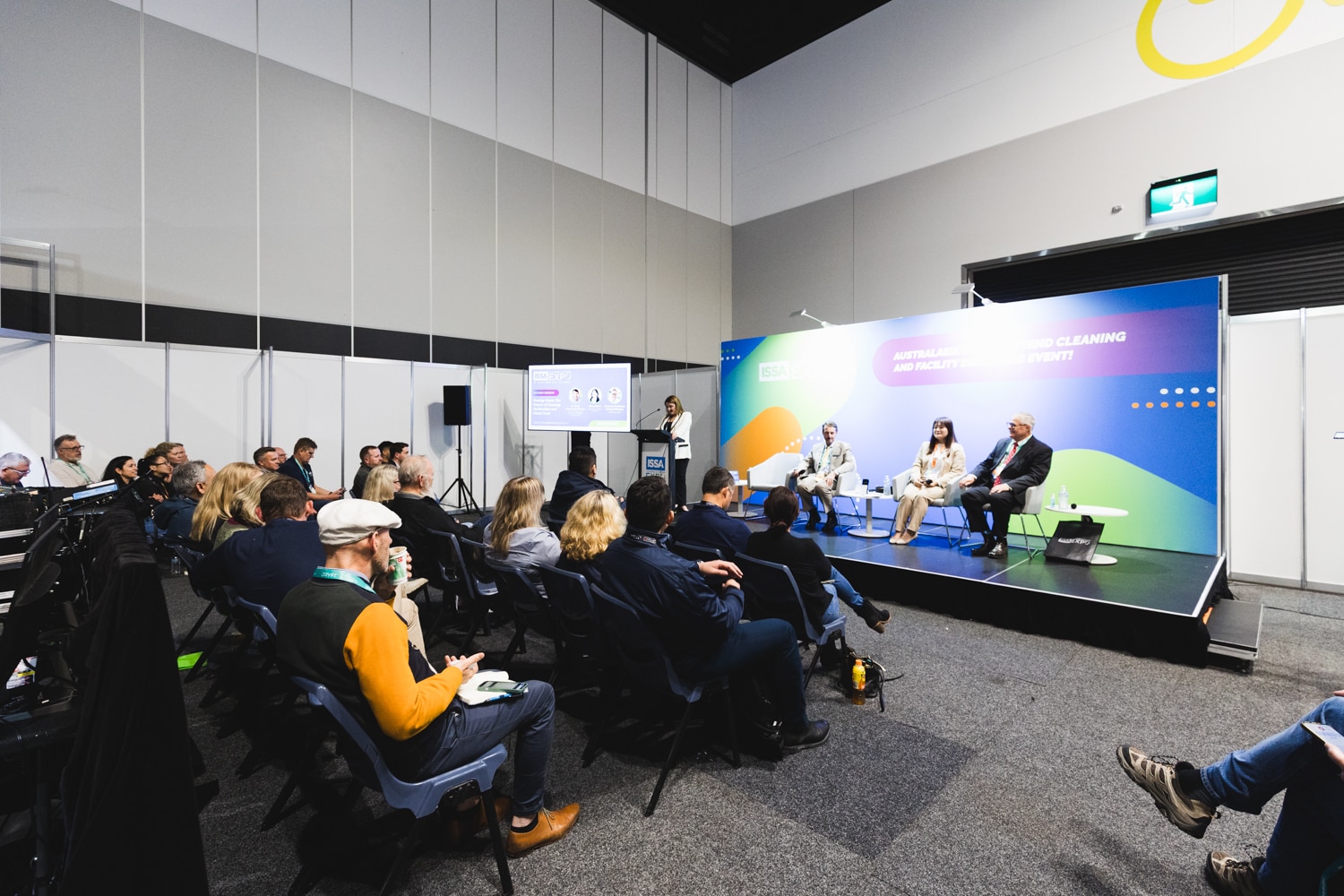
At ISSA Cleaning and Hygiene EXPO 2025, the session “Proving Clean: The Future of Cleaning Verification and Client Trust” drew an overflow audience to the Education Theatre, confirming just how urgent cleaning verification has become across sectors. In a world where “looking clean” is no longer enough, panelists explored how organizations can prove cleanliness using scientific tools, clear standards, and transparent communication with clients and the public.
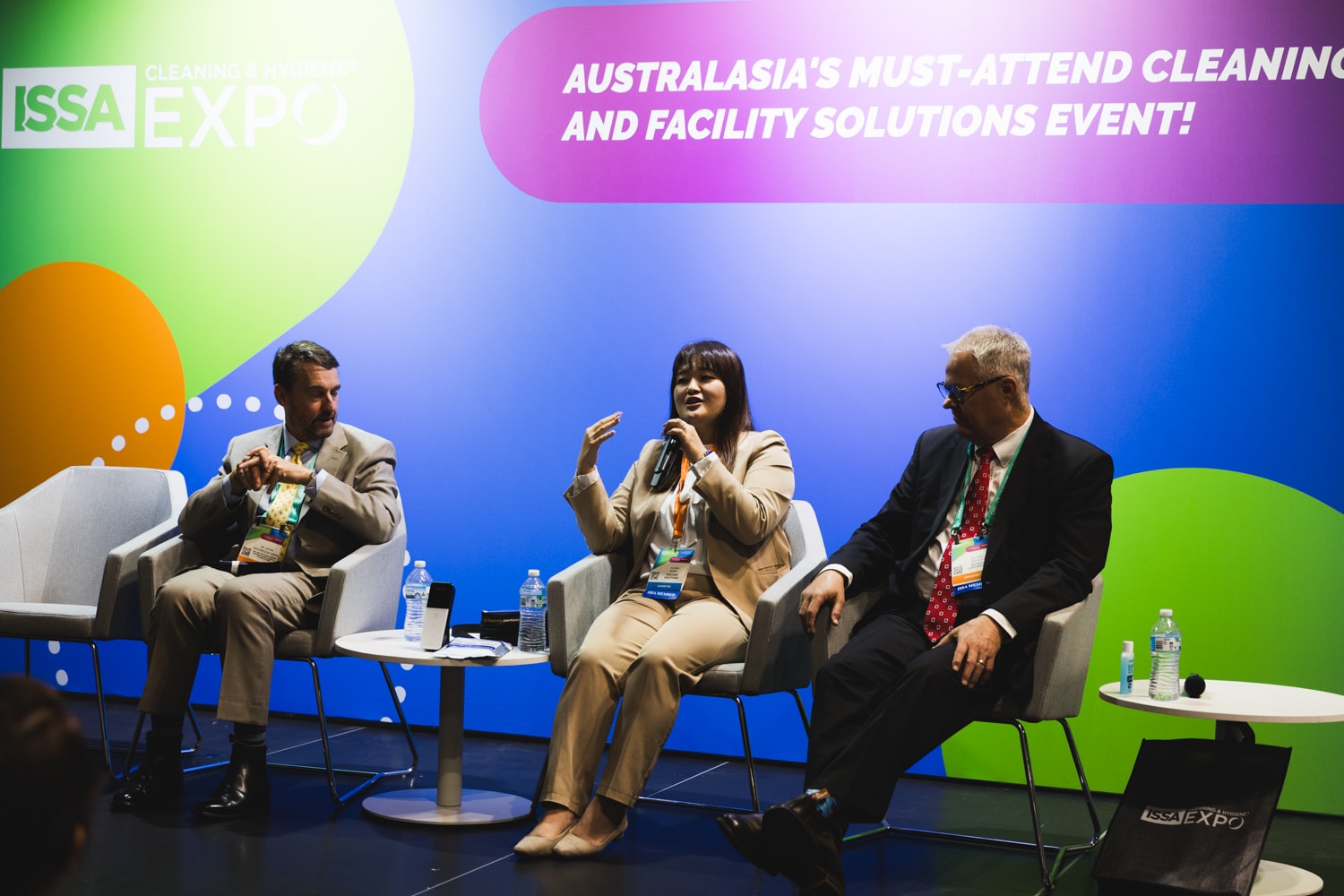
Session Details
In today’s world, being clean isn’t enough—businesses must prove it. From ATP testing and digital monitoring to visual inspections and certifications, cleaning verification is becoming essential across all sectors. Yet the industry faces significant hurdles: inconsistent standards, cost pressures, client skepticism, and confusion about which methods deliver meaningful results. This panel brings together experts from across the industry to explore how the industry can adopt practical, affordable, and trusted verification practices. Panelists will debate whether high-tech solutions are worth the investment, how to communicate cleaning results to clients and the public, and what the future holds for standards and regulations in cleaning verification.
Panelists
- Associate Professor Dr. Gavin Macgregor-Skinner
Senior Director, Global Biorisk Advisory Council (GBAC), a division of ISSA Dr. Macgregor-Skinner brings more than 30 years of experience responding to infectious disease outbreaks and major public health events around the world. He has supported hospitals, long-term care facilities, airports, stadiums, hotels, and other critical infrastructure with biological risk assessments and training, and has served on COVID-19 advisory committees for global brands and professional sports organizations.
- Associate Professor Dr. Greg Whiteley
Executive Chairman, Whiteley Corporation A leading researcher on surface and instrument hygiene, dry surface biofilms, and biofilm-mediated infections, Dr. Whiteley collaborates widely with universities and industry. He has served on multiple Australian Standards committees and advises professional associations on infection control, bringing deep expertise in both scientific evidence and practical implementation.
- Alissa Shida
Regional Manager, Overseas Hygiene Testing Group, Kikkoman Biochemifa Company Microbiology Specialist & Forensic Science Expert With a background in microbiology and forensic science, Alissa leads global hygiene testing projects at Kikkoman Biochemifa Company. Her work focuses on applying microbiological tools—such as ATP testing—to help businesses detect contamination risks, improve cleaning processes, and make data-driven decisions. She also trains industry professionals on best practices in hygiene verification and digital monitoring.
Key Topics from the Discussion
1. From “Looks Clean” to “Proves Clean”
Opening the session, Dr. Gavin Macgregor-Skinner framed “proving clean” as a fundamental shift for the industry. Cleaning can no longer be judged solely on sight or smell; regulators, clients, and the public now expect evidence that environments are truly hygienic and safe. He highlighted how pandemics and high-consequence pathogens raise awareness of infection risk in everyday spaces—from hospitals and care homes to airports, hotels, and venues. Proving cleanliness is no longer just an operational concern; it’s a core component of public health and business continuity.
2. The Science Behind Verification
Dr. Greg Whiteley addressed the gap between what we can see and what actually exists on surfaces. Biofilms, microbial load, and invisible contamination often persist long after a surface “looks clean.” He discussed the strengths and limitations of current tool visual inspections, ATP testing, and other methods—and emphasized the need for quantitative measures to guide decisions. Whiteley surmised: “What we need are systems that give us a quantitative measure that tells us how clean things are, using ATP testing and fluorescent markers for different processes to gather reliable and defensible numbers.” The panel also explored where science and practice diverge, although the technology to measure cleanliness exists, many organizations still rely on subjective checks or inconsistent standards, leaving major gaps in hygiene assurance.
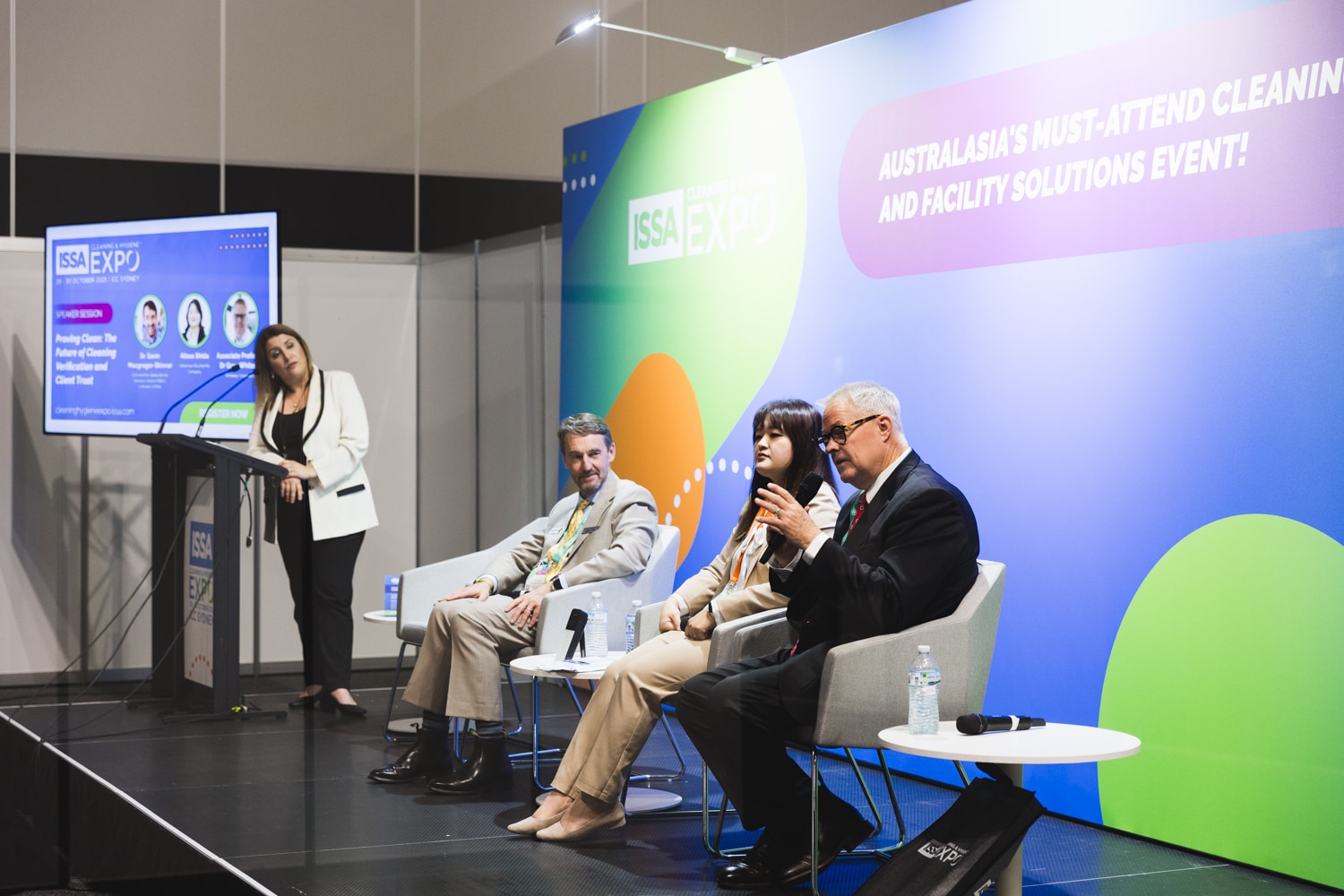
3. Data-Driven Cleaning: Practical Tools for Everyday Teams
Representing the testing and technology side, Alissa Shida shared how ATP monitoring and microbiological tools can support cleaning teams in real-world settings—not just labs or audits. When cleaning is judged only by appearance, decisions depend on subjective judgment: whether something looks clean. This makes it hard to:
- Establish objective baselines
- Compare performance across sites
- Show improvement over time to clients or management
Alissa explained how data-driven tools like ATP monitoring change that dynamic by providing instant, objective measurements of cleanliness:
- They document the starting point
- Visualize progress over time
- Verify the impact of training, products, and cleaning methods
- Help reduce complaints, rework, and hygiene-related incidents
She illustrated this with real-world examples:
By implementing a data-based hygiene management program, the hotel regularly tested high-touch surfaces such as reception counters and elevator buttons. The results showed over 50% improvement in guest room hygiene and more than 90% improvement in common areas. The data supported consistent cleaning practices and contributed to achieving GBAC STAR™ accreditation, reinforcing guest confidence and brand reputation.
JAL applies ATP verification from check-in kiosks and boarding gates to in-flight tray tables. Quantitative hygiene data complements visual inspection and staff training, supporting JAL’s position among global leaders in safety and cleanliness. These examples underline how hygiene verification can shift from “necessary cost” to competitive advantage—offering measurable proof of safety to guests, passengers, and stakeholders. Alissa also addressed common misconceptions around ATP testing and digital hygiene systems, noting that:
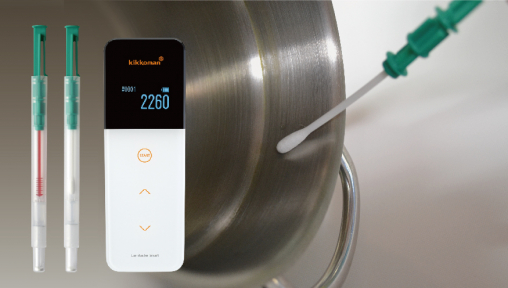
- ATP testing is not just a “spot check”—it’s a real-time management and continuous improvement tool.
- Modern systems are designed for frontline usability, with app-based operation, cloud connectivity, and simple export of reports (PDF/CSV).
- These tools enhance human judgment rather than replacing it, giving teams science-based data to support better decisions.
4. Turning Data into Trust
The panel agreed that verification data only builds confidence when it’s communicated clearly. Alissa and Dr. Macgregor-Skinner discussed how to make technical results meaningful for non-technical audiences:
- Translate raw ATP numbers into simple visuals—trends, heat maps, and “traffic light” thresholds.
- Use before-and-after comparisons to show the impact of new protocols or training.
- Provide transparent, concise reports instead of dense, hard-to-interpret audit documents.
At Kikkoman Biochemifa, Alissa noted that sharing straightforward hygiene reports helps shift the conversation from:
“Did we pass?” → to → “How much have we improved?”
This performance-based mindset strengthens internal accountability and builds genuine trust with clients and guests.
A sub-question to Dr. Whiteley examined who is ultimately responsible for implementing monitoring systems. His comments emphasized that responsibility must be shared: cleaning providers, facility managers, and senior leadership all play a role in setting expectations, choosing tools, and embedding verification into everyday practice.
5. Standards, Consistency, and the Path Forward
Drawing on his work on the standards committees, Dr. Whiteley discussed why cleaning verification benchmarks remain inconsistent. Factors include:
- Variations between industries and risk profiles
- Different regulatory expectations across regions
- Rapidly evolving technologies outpacing standardization
The panel explored how the industry can move toward more harmonized definitions of “cleaning” and “hygiene,” including:
- Clearer terminology and risk-based categories
- Aligning tools like ATP testing and fluorescent markers within standard frameworks
- Closer collaboration between manufacturers, associations, and regulators
A key question posed to all panellists: What are the next steps for developing shared definitions for cleaning and hygiene that work across sectors? The discussion highlighted the need for continuous dialogue and evidence-based guidelines. 6. What’s Next: AI, Sensors, and Predictive Hygiene In the closing segment, the panel looked ahead to the future of cleaning verification. Alissa shared how the industry is moving from reactive testing to predictive intelligence:
- ATP testing already allows rapid, on-the-spot decision-making.
- Next-generation tools will integrate AI, connected sensors, and large-scale data analytics.
- Systems will increasingly be able to detect patterns, predict potential hotspots, and recommend when and where recleaning will be most effective.
At Kikkoman Biochemifa, work is already underway to leverage large ATP datasets for trend analysis dashboards—combining environmental conditions, cleaning frequency, and risk factors to help facilities move from monitoring to prevention. Ultimately, the panellists agreed:
- The future is not about replacing people with technology.
- It’s about giving teams smarter tools, clearer visibility, and stronger evidence to support safe, healthy environments.
The guiding question will shift from “How clean does it look?” to “How healthy is this environment—right now?” Practical Takeaway for Cleaning Professionals In a final wrap-up, each panellist shared one action cleaning professionals can start tomorrow to improve verification. Alissa’s message was simple and powerful: Start measuring—even in small ways. You don’t need a complex system to begin. What matters is turning “I think it’s clean” into “I know it’s clean.” By incorporating quick verification tools—such as ATP testing—into daily routines, teams can:
- Build a habit of checking and recording results
- Identify patterns and high-risk areas
- Demonstrate success, not just look for failures
Verification, she emphasized, is not about catching mistakes; it’s about showcasing the critical work cleaning teams do every day and giving them confidence that their efforts truly protect people.
About Kikkoman Biochemifa Company
Kikkoman Biochemifa Company provides advanced hygiene testing solutions, including ATP testing systems and microbiological verification tools, used by hotels, airlines, food manufacturers, healthcare facilities, and professional cleaning providers worldwide. Through collaborations with organizations like ISSA and GBAC, Kikkoman Biochemifa is committed to supporting data-driven hygiene programs that enhance cleanliness, safety, and client trust.